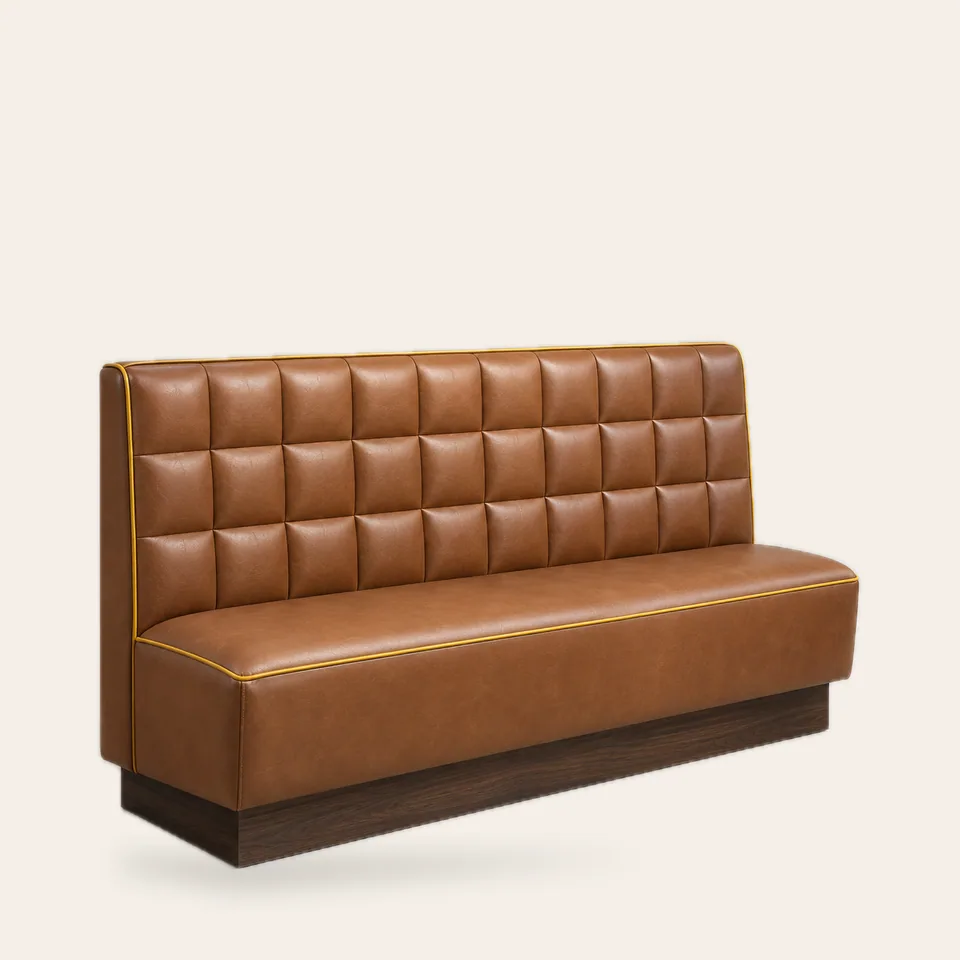
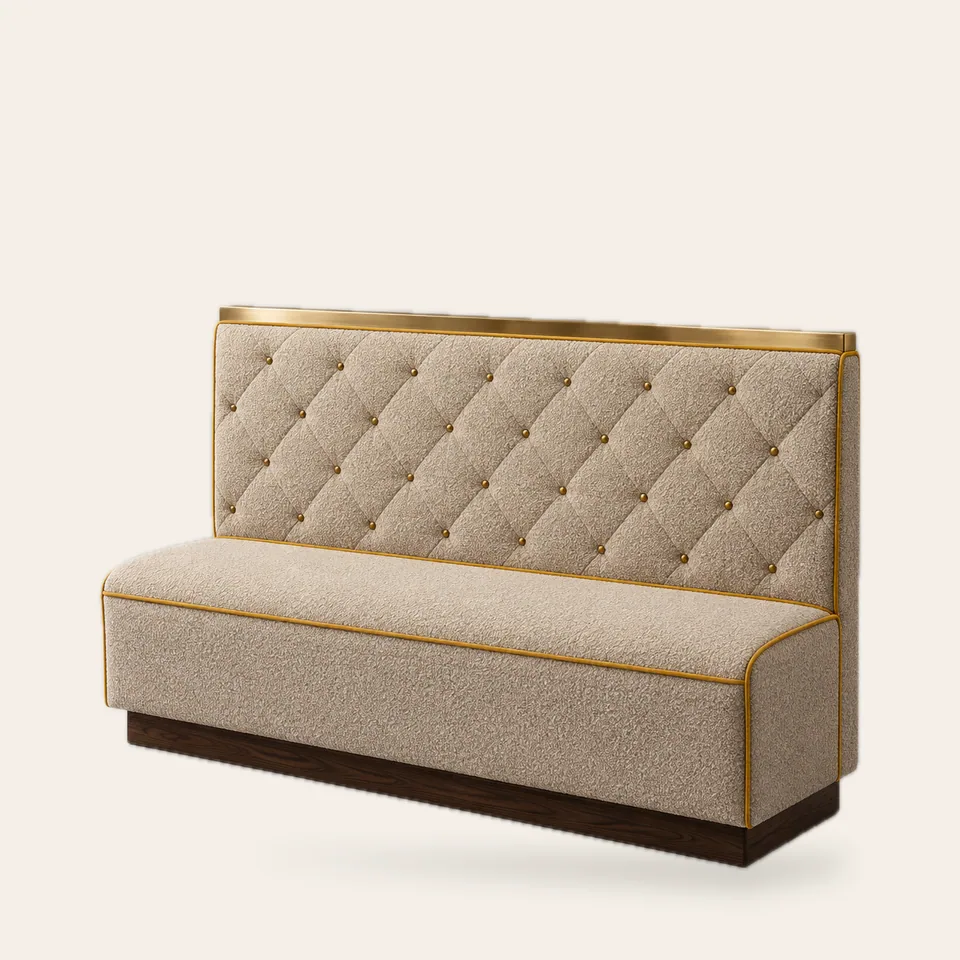
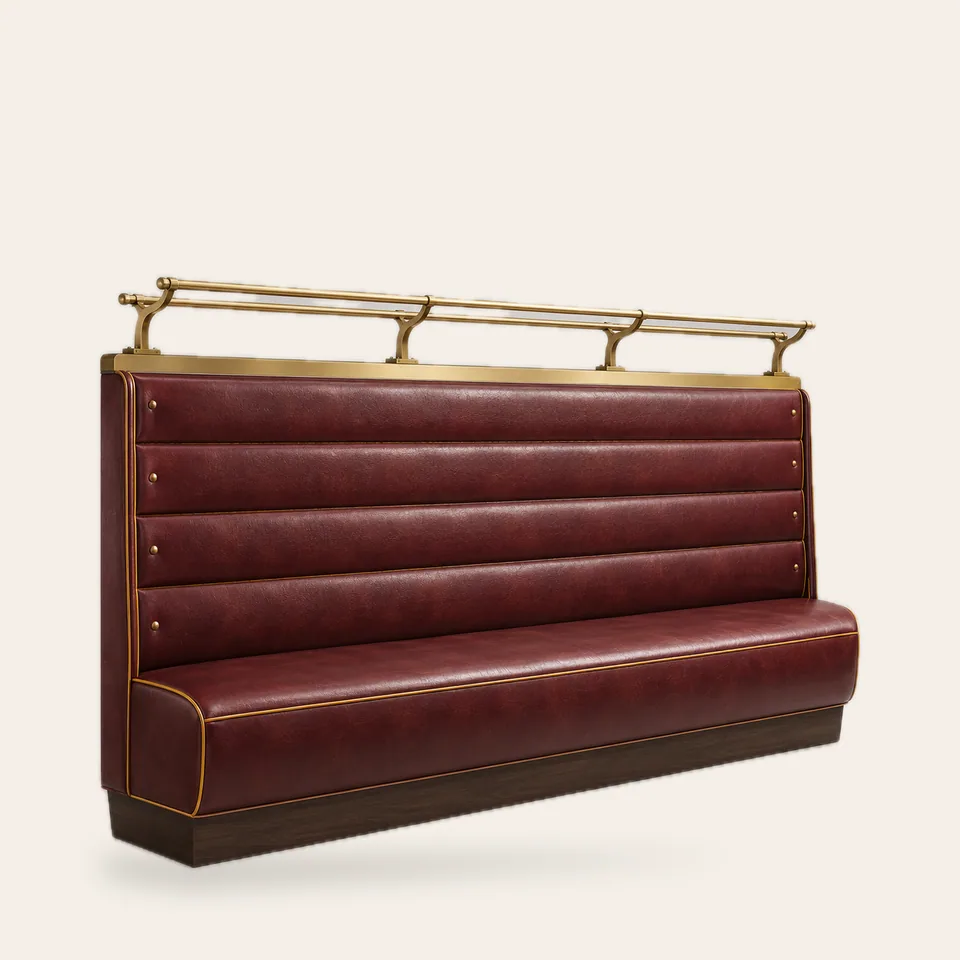
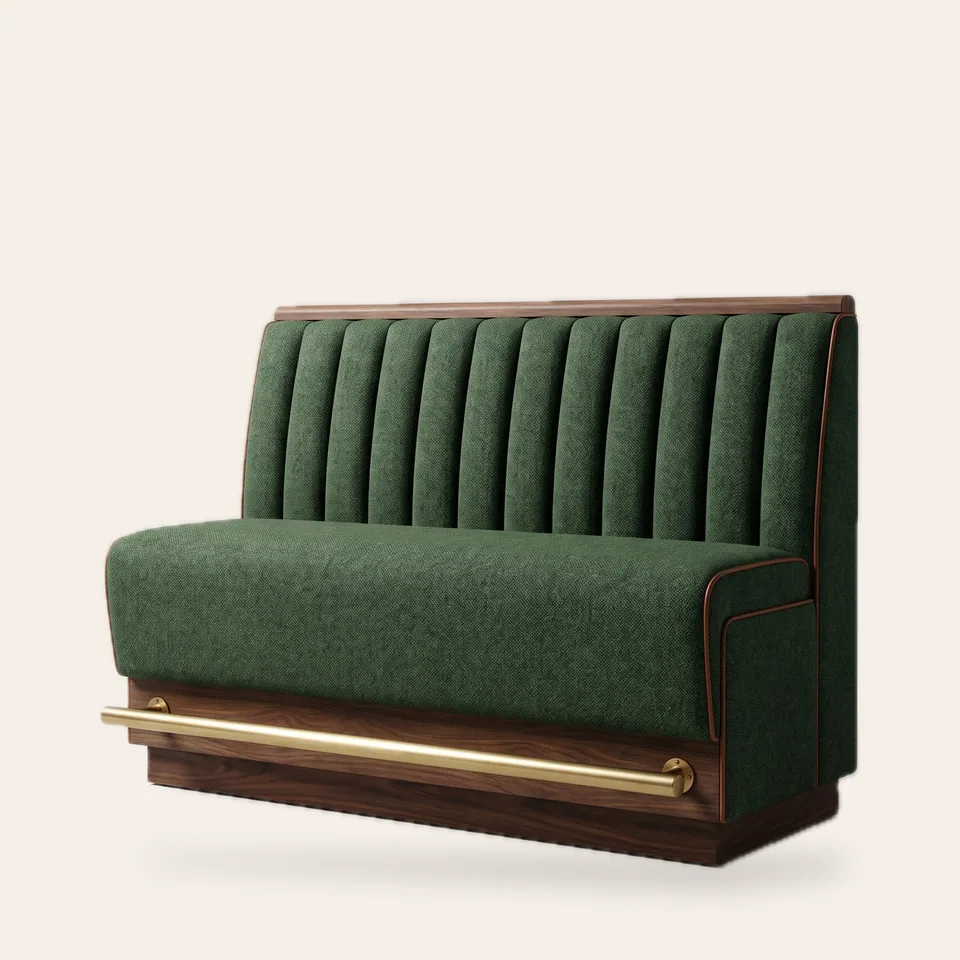
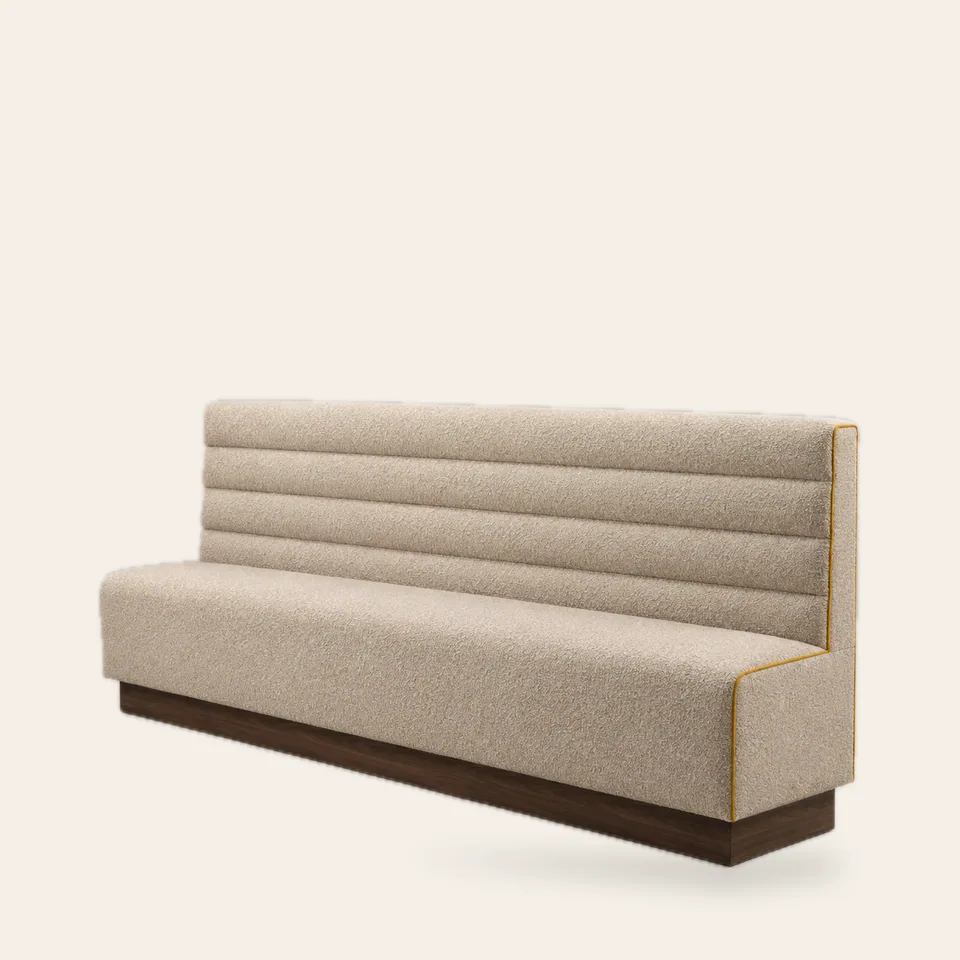
The back of a booth is where a diner shows its personality. A run of biscuit tufting reads as a classic coffee shop, deep horizontal rolls read as a 1950s diner, and diamond quilting with buttons dresses a room up toward a supper club.
What we offer
- Biscuit (square) tufting: a grid of stitched squares with no buttons, the easiest tufted back to clean.
- Diamond quilting: a 45-degree diamond grid with a button at each intersection.
- Horizontal roll: stitched channels running the length of the booth, with optional luggage-rack rail above.
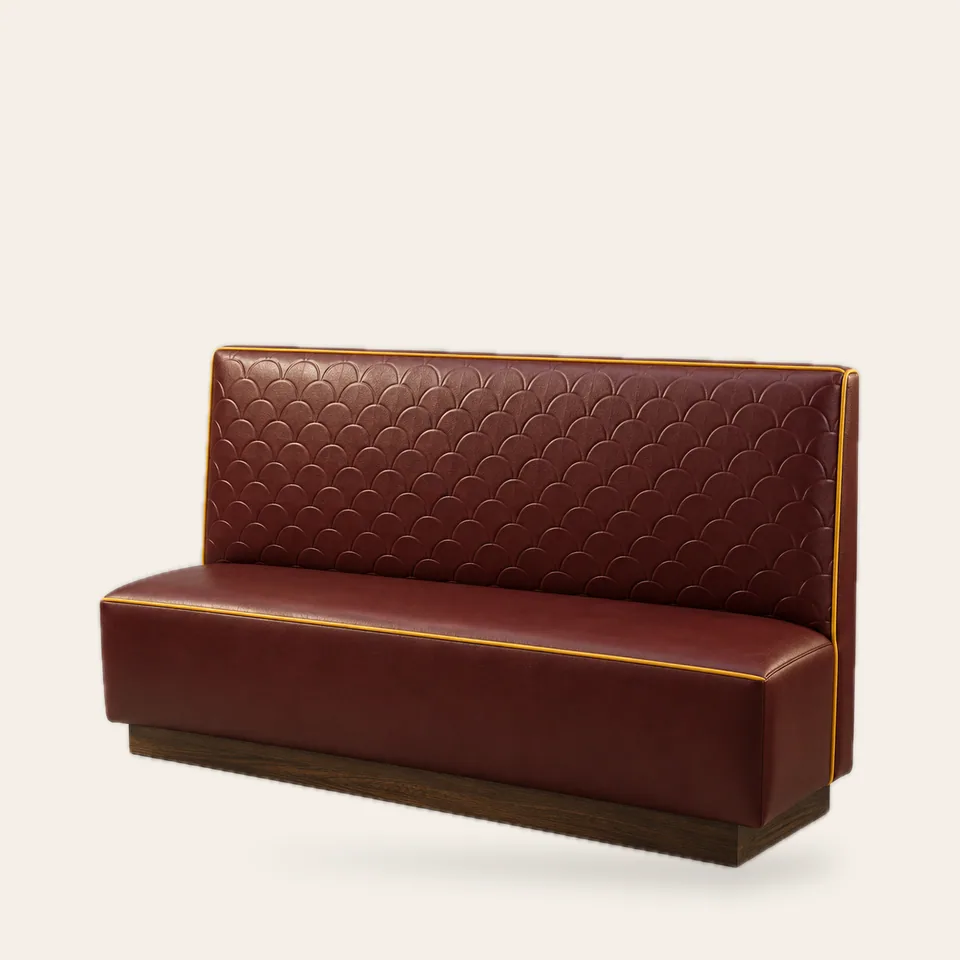
- Embossed: a pattern pressed into the surface rather than stitched, smooth to wipe.
| Back style | Look | Cleaning effort | Best in |
|---|---|---|---|
| Biscuit tuft | Classic diner, coffee shop | Low: no buttons, shallow seams | Diners, burger bars |
| Horizontal roll | 1950s diner, brasserie | Low to medium | Diners, long wall runs |
| Diamond quilt with buttons | Supper club, retro lounge | Medium: buttons collect crumbs | Evening rooms, bars |
| Embossed pattern | Smooth, decorative | Lowest | High-volume rooms |
Buttons look great but collect crumbs; in breakfast-heavy diners we usually recommend biscuit tufting or rolls. All backs can be combined with a plain seat, which takes most of the wear and is the easiest part to re-cover.
Pairing backs with seats: a tufted or rolled back with a smooth seat is the classic combination, and the most practical, because the seat takes most of the wear and is the quickest part to re-cover years later.