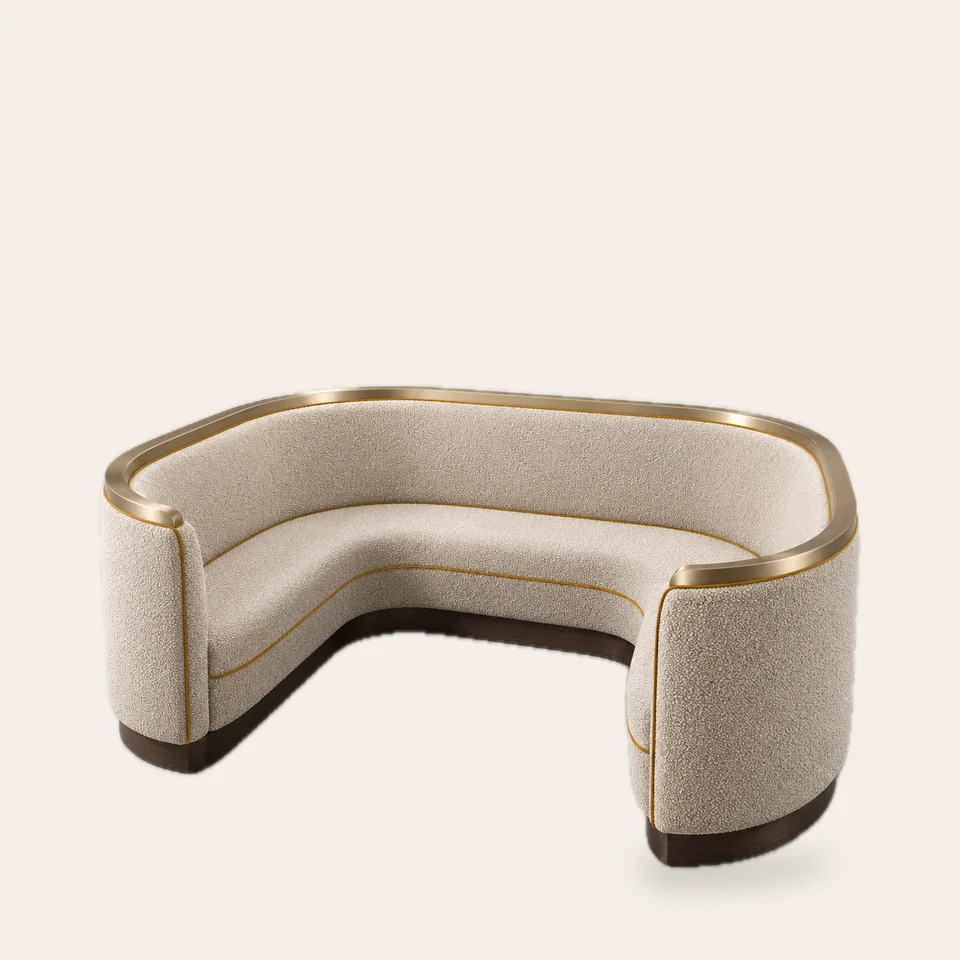
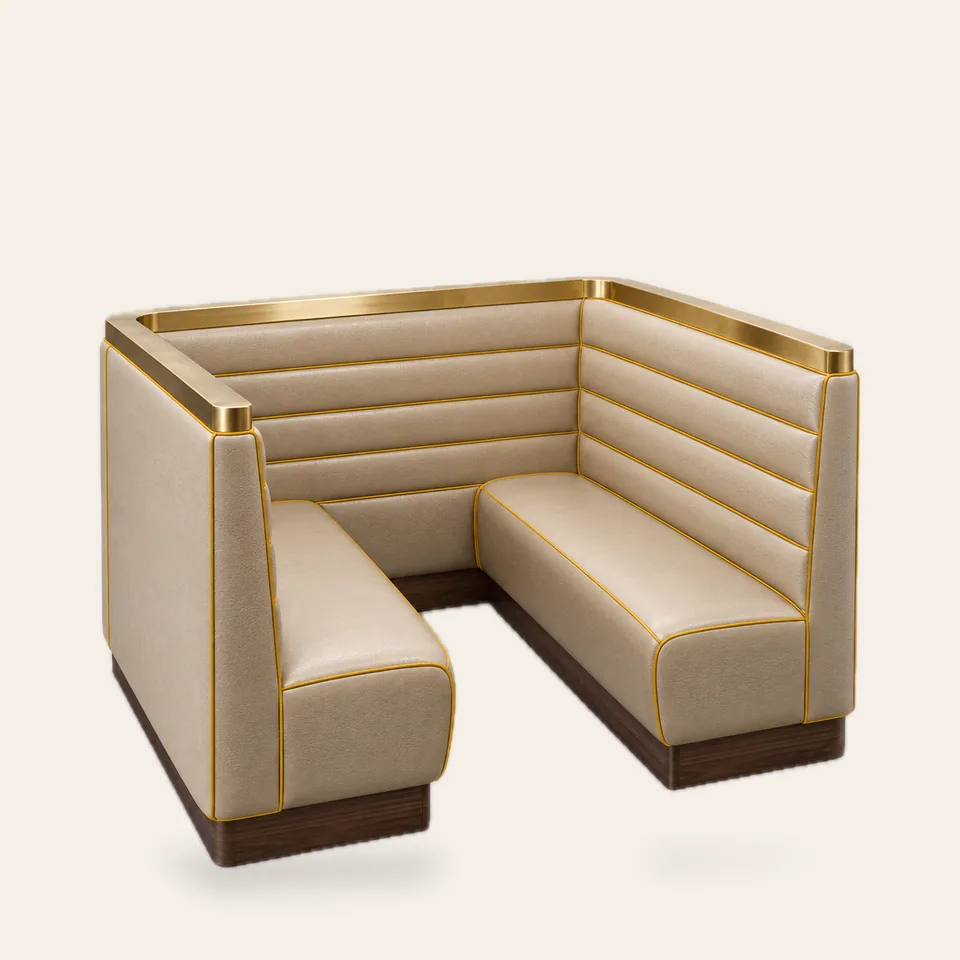
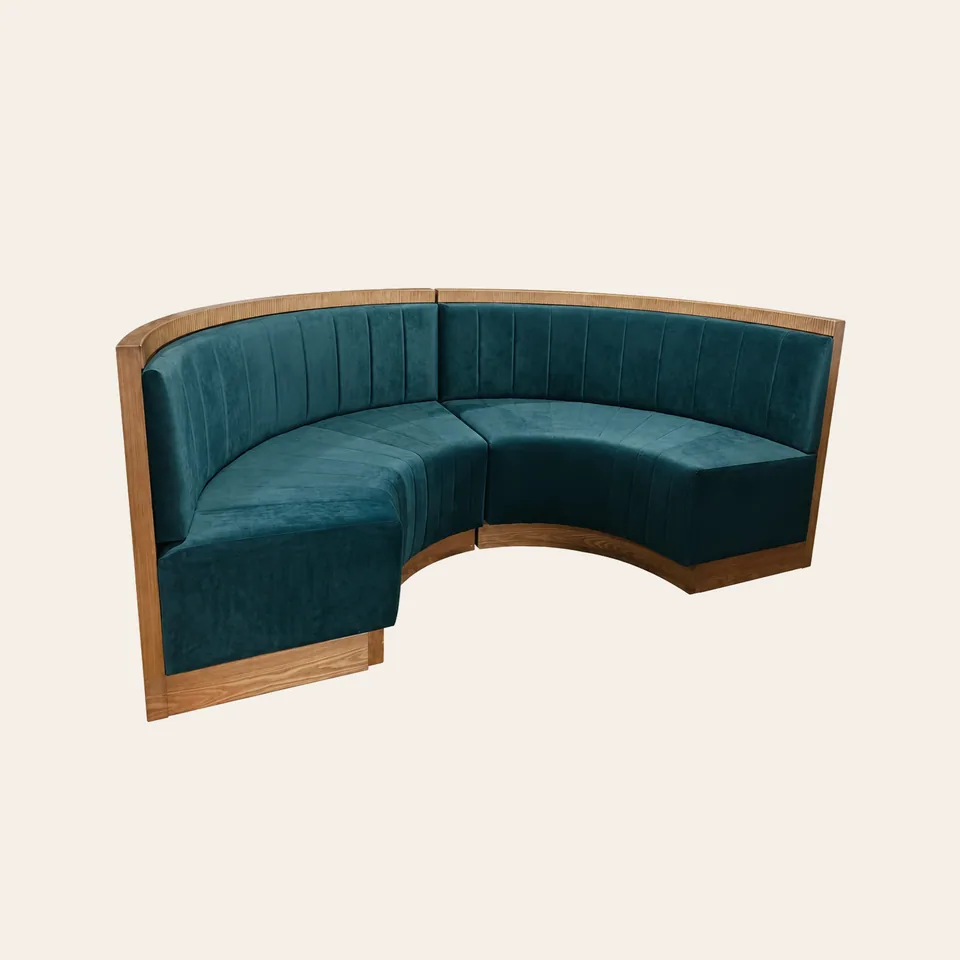
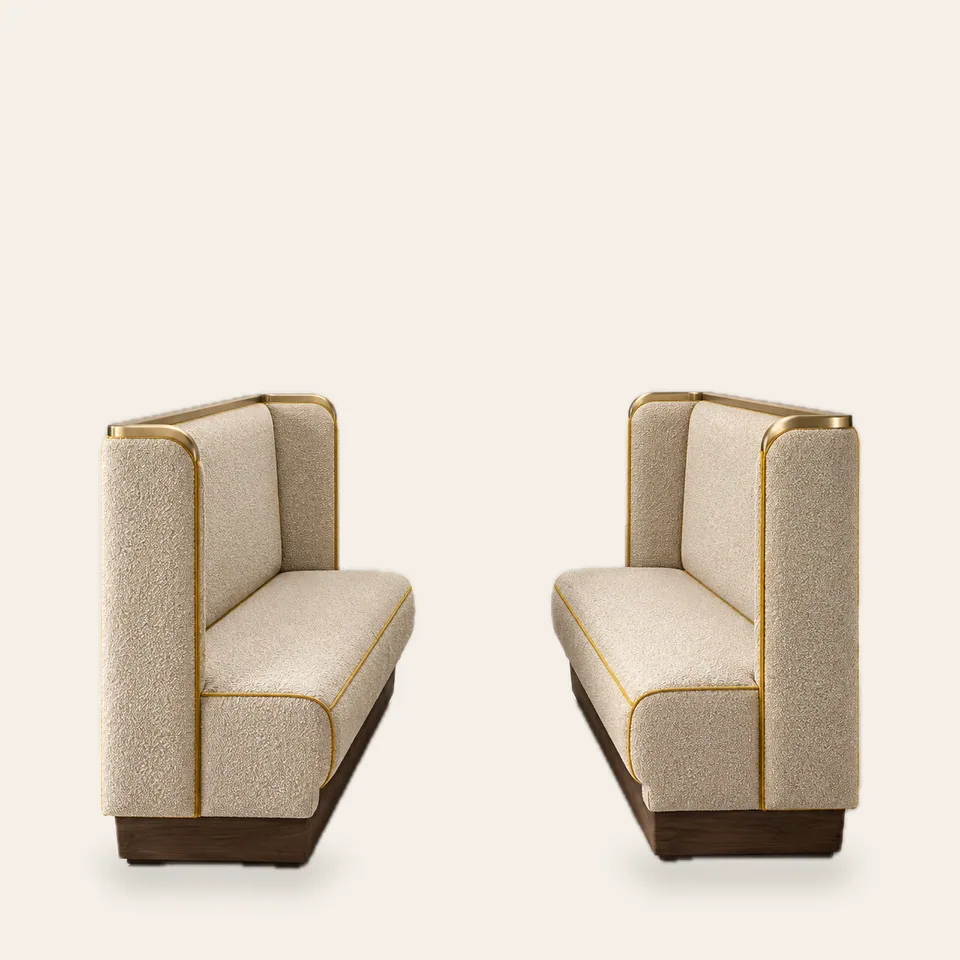
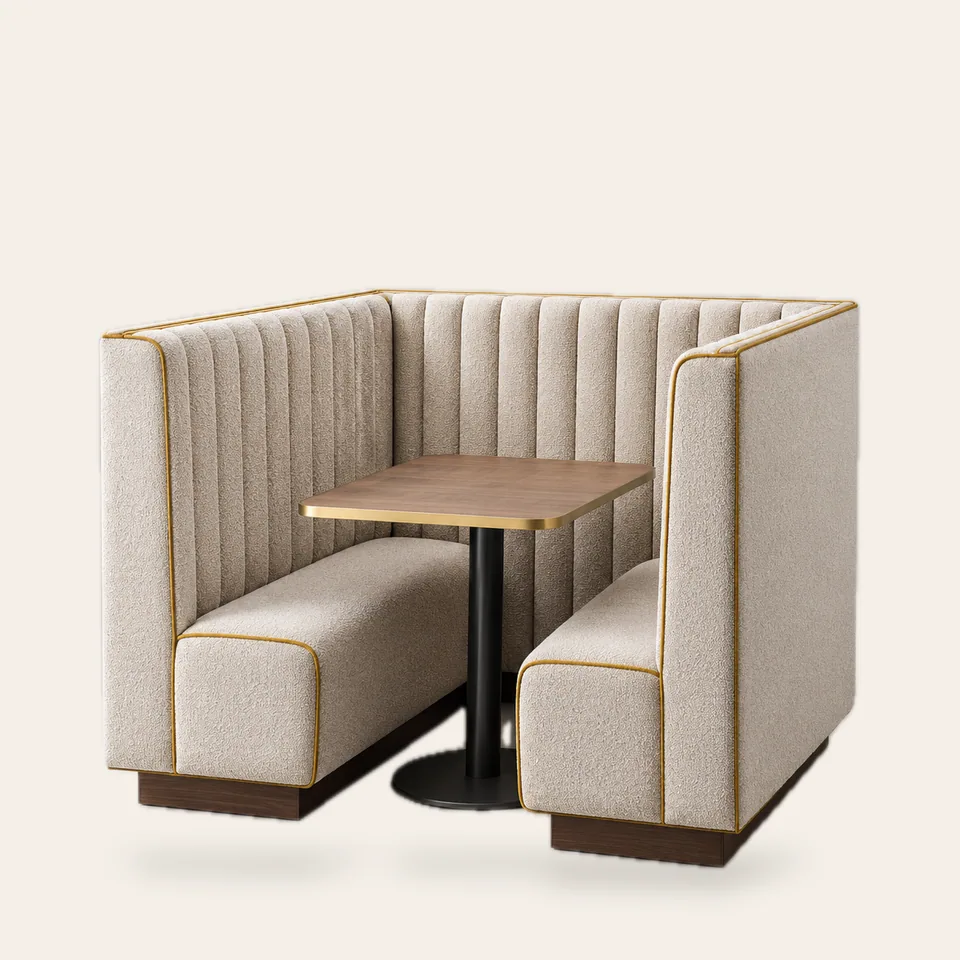
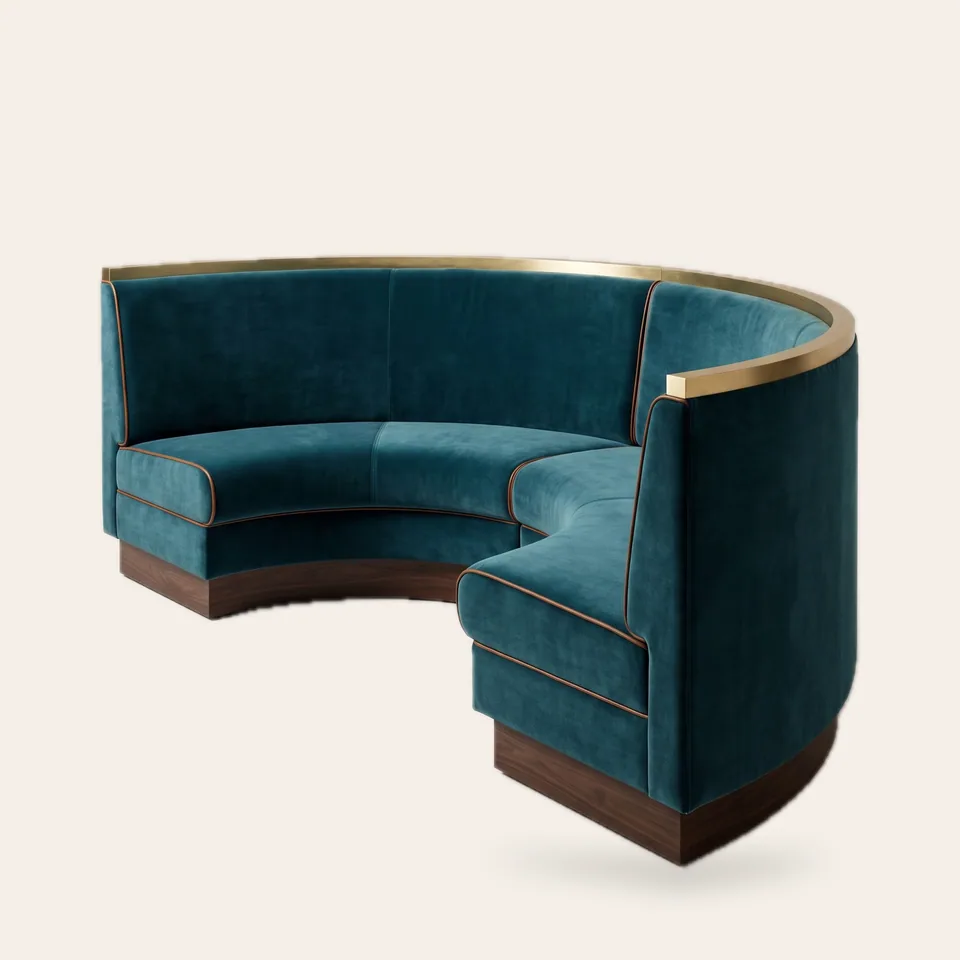
Curved booths seat more people per square foot of corner than any other format, and they are where groups and regulars want to sit. They are also the hardest booths to make well: channels must follow the curve evenly, and seams must stay tight around the bend.
Formats
- Horseshoe: two facing booths joined by an end section, the classic diner bay.
- U-booth: a continuous U with rounded ends that seats six to eight around one table.
- Half-round: a curved booth for corners, often paired with a round or D-shaped table.
- Pocket booth: a pair of short facing booths with side wings, a private two-top.
| Format | Typical size | Seats |
|---|---|---|
| Horseshoe bay | 59 in (150 cm) wide, two facing rows | 4-6 |
| U-booth | 94 in (240 cm) outer width, 47 in (120 cm) opening | 6-8 |
| Half-round | 60-84 in (152-213 cm) diameter | 4-6 |
| Pocket two-top | 2 x 35 in (90 cm) booths, 30 in (75 cm) apart | 2 |
| Micro-booth | 48 x 60 in (122 x 152 cm) unit | 2 |
Curved booths are built in sections so they ship and install through standard doors. Pair them with a pedestal table so guests can slide around without hitting legs.
Planning tip: curved booths need a little more clearance around their ends than straight ones, because guests enter at an angle. We mark the clear space on the layout drawing.